.png)
Busy Isn’t Productive: How to Spot Operational Inefficiency

A full calendar can hide a weak operation. So can a noisy warehouse, a packed production schedule, a long ticket queue, or a team that seems to be working late every week.
Activity is visible. Performance is measurable.
That gap is where many organizations lose margin, speed, and trust. People stay busy, but the business does not get meaningfully better. Orders still miss dates. Customers still wait. Managers still chase updates. Leaders still ask why effort is not turning into results.
Operational inefficiency rarely announces itself as waste. It often looks like commitment.

Busyness is a signal, not proof of progress
Busy teams are not always inefficient. Some work is complex, seasonal, or urgent by nature. The problem starts when busyness becomes the default explanation for poor results.
Executives should be cautious when they hear phrases such as:
“Everyone is slammed.”
“We just need more people.”
“That is how the process works.”
“We are waiting on another team.”
“We had to create a workaround.”
Each statement may be true. None of them explains whether the work creates value.
A productive operation converts effort into outcomes. That means faster cycle times, fewer errors, better customer experience, lower rework, clearer accountability, and more predictable delivery.
A busy operation consumes effort without a matching gain. It may produce meetings, reports, approvals, escalations, and status checks. Yet the same problems return next week.
The executive question is simple: What changed because this work happened?
If the answer is unclear, the organization may be managing activity instead of performance.
Look for work that keeps coming back
One of the clearest signs of operational inefficiency is repeat work. A customer request gets touched by five people. A shipment gets corrected twice. A report gets rebuilt each month because the source data is unreliable. A team spends Friday fixing what another team rushed on Tuesday.
Rework often hides inside normal routines. It does not always appear as a separate cost line. It shows up as:
Corrections after handoffs
Duplicate data entry
Manual checks after system outputs
Repeated customer follow-ups
Exceptions that no longer feel exceptional
Managers reviewing work that should already be right
The issue is not that employees make mistakes. The issue is that the system allows the same preventable problem to recur.
A strong operation treats repeat work as evidence. It asks where the defect entered the process, why it was not caught earlier, and what would prevent it next time.
A weak operation treats repeat work as part of the job.

Watch the handoffs
Many performance problems live between teams, not inside them.
A department may hit its internal target while slowing the larger business. Sales may close deals that operations cannot support. Procurement may reduce unit cost while increasing delays. Finance may require controls that create late approvals. Customer service may solve individual cases while hiding product or process defects.
No single team looks responsible, but the total system suffers.
That is why handoffs deserve executive attention. Every handoff creates a chance for delay, confusion, missing context, or rework. The more handoffs a process requires, the more discipline it needs.
Questions worth asking include:
Who owns the outcome from start to finish?
Where does work wait between steps?
What information must be corrected after transfer?
Which approvals rarely change the decision?
Where do teams create side channels to get things done?
Side channels matter. Shared spreadsheets, private message threads, personal trackers, and unofficial checklists often reveal a process that people do not trust. These tools may help in the short term, but they also show where the formal system fails.
The goal is not to punish workaround behavior. Workarounds often come from capable people trying to protect the customer. The goal is to learn what the workaround is compensating for.
Measure flow, not just effort
Traditional activity measures can mislead. Hours worked, calls handled, tickets closed, orders processed, and reports produced all have a place. But they do not tell the full story.
A team can close many tickets while the hardest problems age. A plant can produce more units while quality slips. A service team can answer quickly while customers need to call back again. High output in one metric can hide damage elsewhere.
Better measures show flow and quality together.
Activity measure | Better performance question |
How many tasks did we complete? | How long did work take from request to resolution? |
How many people were assigned? | How much waiting occurred between steps? |
How many errors were fixed? | Why did the errors happen in the first place? |
How many orders shipped? | How many shipped complete, accurate, and on time? |
The point is not to add more dashboards. Many organizations already have too many. The point is to connect measures to the outcome the business actually needs.
Good operating metrics help leaders see whether work is moving cleanly through the system. They make delay, rework, and unclear ownership visible.

Listen for management by escalation
Escalation has a purpose. Some issues need senior attention. But when escalation becomes the normal way to get work done, the operating model is under strain.
Frequent escalation means the process lacks one or more basics:
Clear decision rights
Reliable service standards
Enough capacity in the right place
Useful data at the point of work
Trust between teams
A path for exceptions that does not require heroics
Heroics can feel good. They create stories of dedication. They also create risk. If the business depends on a few people pushing work through informal channels, performance is fragile.
Executives should ask which results depend on personal intervention. If a customer order only ships because a manager called in a favor, that is not operational strength. It is a warning.
The same applies to “urgent” labels. When everything is urgent, priority has lost meaning. Teams start reacting to noise instead of following a clear sequence of value.
Find the friction employees have stopped reporting
People close to the work often know where the waste is. They know which system fields are never used, which approval adds no value, which report nobody reads, and which customer issue has been solved manually for months.
The challenge is that employees stop reporting friction when nothing changes.
Leaders can uncover this by asking practical questions:
What task takes longer than it should?
Where do you enter the same information twice?
What do you check manually because you do not trust the process?
What issue would disappear if one upstream step improved?
What rule makes sense on paper but fails in daily work?
The answers may be small. That is fine. Operational drag often comes from many small frictions repeated thousands of times.
A useful executive habit is to separate blame from diagnosis. The goal is not to find who is at fault. The goal is to find where the design of work produces waste.
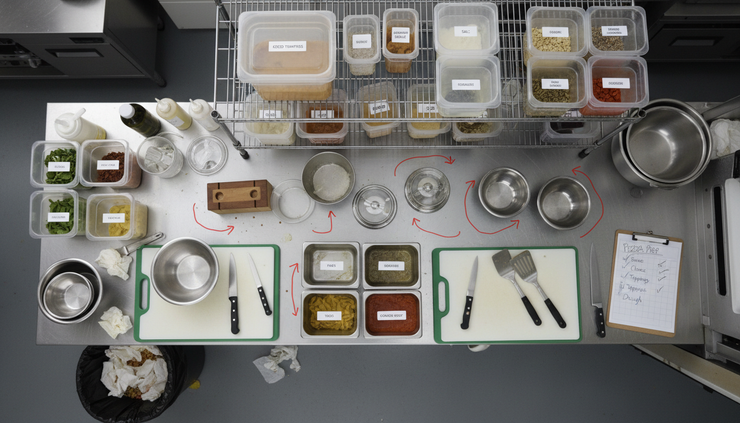
The takeaway is to manage the system, not the noise
Busy operations often reward speed, effort, and rescue behavior. Productive operations reward clean flow, clear ownership, and fewer preventable problems.
To spot operational inefficiency, look past visible activity. Follow the work. Watch where it waits, repeats, changes hands, or needs intervention. Compare the energy going in with the value coming out.
The best signal is rarely how hard people are working. It is whether the system helps good work happen consistently.
Start with one important process. Map how work really moves, not how the policy says it should move. Identify one source of repeat work, one slow handoff, and one unnecessary approval. Fix those before adding more capacity.
A less busy organization may be the one that is finally performing well.


Comments